
Beat the Runoff: How Smart Irrigation Solves Clay Soil Drainage Problems
If you’re a homeowner in Farmington, you’re likely familiar with the unique challenges of our local soil. You water your lawn, and instead of a healthy, green oasis, you get puddles in some spots and dry patches in others. Water streams across your sidewalk and down the gutter, wasting a precious resource and running up your utility bill. This is the classic struggle with Utah’s dense clay soil, and it can be incredibly frustrating.
Many believe the solution is to simply water less, but that often leads to stressed, unhealthy turf. The real answer isn’t watering less—it’s watering smarter. Modern irrigation technology offers a powerful solution that works with our soil, not against it. In this guide, we’ll explore why clay soil is so tricky, how traditional sprinklers make the problem worse, and how a well-designed smart irrigation system can give you the beautiful, water-efficient landscape you’ve been wanting.
Understanding the Challenge: Why Clay Soil Causes Headaches
What exactly is clay soil? It’s made of very fine mineral particles packed tightly together. Unlike sandy soil, which has large gaps that water flows through quickly, clay soil has tiny pores. This structure gives it two distinct characteristics:
- High Water Retention: Once water gets in, clay holds onto it for a long time. This can be a benefit during dry spells, but it’s also why it gets waterlogged easily.
- Slow Absorption Rate: The biggest challenge is how slowly it absorbs water. Think of it like trying to pour water onto a dry sponge—at first, the water just beads up and rolls off. Clay soil behaves similarly. When a sprinkler system applies a large volume of water all at once, the soil can't soak it up fast enough. The result is runoff.
This runoff is more than just wasted water. It can carry away valuable topsoil and fertilizers, weaken your lawn's root system by encouraging shallow growth, and contribute to uneven watering that leaves your landscape looking patchy and unhealthy. For homeowners who prioritize high-quality work and a pristine yard, this constant battle is a significant pain point.
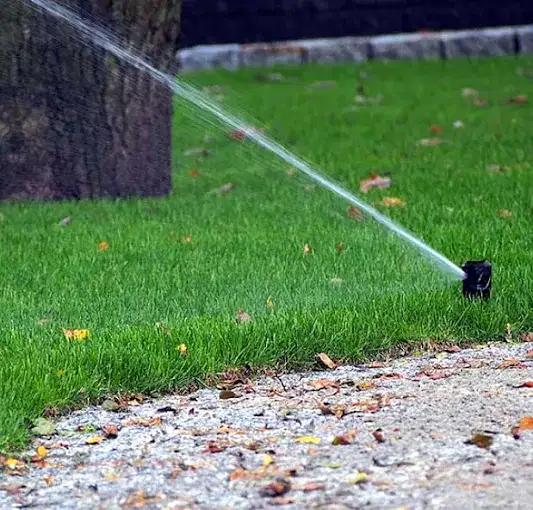
How Conventional Sprinkler Systems Make Things Worse
For decades, the standard approach to irrigation was a simple timer connected to a set of valves. You’d set it to run for 20 minutes per zone, three times a week, and hope for the best. Unfortunately, this “one-size-fits-all” method is particularly ineffective for clay soil.
Traditional systems apply water at a constant, high rate. Within minutes, the application rate exceeds the soil's slow absorption rate. Every drop of water that falls after that point is wasted. It pools on the surface or runs off into the street. This inefficiency is not only bad for the environment but also for your wallet. You end up paying for water that never even reaches your plants' roots.
This outdated approach fails to account for the most important variables: soil type and weather. It will water your lawn the same way on a cool, cloudy day as it does during a hot, dry spell, leading to chronic over or under-watering. To achieve a truly healthy and efficient landscape, you need a system that is intelligent enough to adapt.

The Solution: Cycle & Soak with Smart Irrigation
This is where modern technology transforms lawn care. A water-wise irrigation system equipped with a smart controller is the single most effective tool for conquering clay soil. These systems don't just run on a fixed schedule; they use data to make intelligent decisions.
Here’s how they solve the drainage problem:
-
Cycle and Soak Watering: This is the game-changer. Instead of watering a zone for 20 minutes straight, a smart controller breaks it up into multiple, shorter cycles. For example, it might water for 5 minutes, then pause for 30 minutes to let that water soak deep into the clay. It then repeats this cycle until the total watering time is met. This simple change prevents runoff almost entirely, ensuring water gets to the root zone where it’s needed.
-
Weather-Based Adjustments: Smart controllers connect to local weather stations. They know if it rained yesterday, if high winds are expected, or if a heatwave is coming. They automatically adjust watering schedules, so you’re never watering in the rain or letting your lawn dry out during a hot spell.
-
Professional Design and Audits: Technology is only as good as its implementation. A proper sprinkler design ensures you have the right type of heads and correct spacing for full coverage without overspray. If you have an existing system, a professional sprinkler consultation can identify inefficiencies and recommend upgrades. Sometimes, a full sprinkler system revamp is the best way to maximize water savings and lawn health for the long term.
Take Control of Your Landscape Today
Fighting with puddles, runoff, and a stressed lawn doesn't have to be your reality. By embracing smart irrigation technology tailored to our region's clay soil, you can achieve a healthier, more beautiful landscape while conserving water and saving money. It’s about giving your lawn exactly what it needs, precisely when it needs it, in a way it can actually absorb.
If you're tired of the guesswork and waste, it's time for an upgrade. The team at Oberg Irrigation specializes in creating custom irrigation solutions that solve the unique challenges of properties along the Wasatch Front. Let us help you build a system that works for your yard, not against it.
Ready to put an end to your watering woes? Contact us today for a professional sprinkler consultation and discover how a smart irrigation system can transform your Farmington home's landscape.